Storage Unit Rental Agreement
Storing belongings in a rental unit means trusting the facility with things you cannot replace. Access hours, prohibited items, and lien rights are where a storage unit rental agreement template turns promises into enforceable rules.
Customize & DownloadStorage Unit Rental Agreement Sample
This Storage Unit Rental Agreement is entered into as of [1. Effective Date] by and between [2. Facility Owner Name] (the “Owner”) and [3. Tenant Full Name] (the “Tenant”) for the storage unit described as [4. Unit Number] located at [5. Facility Address].
1. Term.
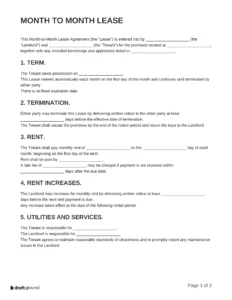
This agreement is month-to-month and continues until terminated by either party with [6. Notice Period] days’ written notice. Rent is due monthly in advance.
2. Rent.
The Tenant shall pay monthly rent of [7. Monthly Rent], due on the [8. Rent Due Day] day of each month, payable by [9. Payment Method]. A late fee of [10. Late Fee] applies if payment is not received by the due date, and rent that remains unpaid may result in a lien on the stored property as described below.
3. Access.
The Tenant may access the unit during the facility’s access hours of [11. Access Hours]. The Owner may restrict access for maintenance, emergencies, or when rent is past due. The Tenant shall not use the unit as a residence or for any business that operates on the premises.
4. Prohibited Items.
The Tenant shall not store hazardous, flammable, explosive, or perishable materials, firearms, illegal substances, or any item that would violate law or insurance policies. The Owner may inspect the unit with reasonable notice, or immediately if a hazard is suspected.
5. Condition and Liability.
The Tenant acknowledges that the unit is provided as-is, and the Owner is not liable for loss or damage to stored property caused by fire, water, theft, or any other event. The Tenant is encouraged to maintain insurance on the stored contents and may be required to provide proof of coverage.
6. Lien and Abandoned Property.
If rent remains unpaid for [12. Lien Period] days, the Owner may exercise a lien over the stored property in accordance with state law, and may ultimately sell the property at public auction to satisfy the unpaid amounts. Property remaining after termination of this agreement for [13. Abandonment Period] days shall be considered abandoned and may be disposed of by the Owner.
7. Termination and Access Default.
The Tenant shall vacate the unit and remove all property by the end of the notice period. If the Tenant fails to vacate, the Owner may change the unit’s lock, and the Tenant’s stored property shall be subject to the lien and abandonment provisions above.
Did this document meet your needs?
What was missing or could be improved?
What's Included
6 provisionsThis template is provided for informational purposes only and is not legal advice. Self-storage lien and foreclosure procedures vary by state; consult an attorney before use.
How to Use
Prepare the storage form
The template reflects 2026 self-storage practice, with lien and access clauses ready.
Enter the unit terms
Add the unit number, rent, due day, access hours, notice period, and lien timeline.
Save and distribute
Preview the agreement and download it as Word or PDF for both parties to keep.
Frequently Asked Questions
Can a storage facility sell my belongings if I stop paying?
Yes, after a process governed by state law — notice, a waiting period, and typically a public auction. The facility holds a lien on the stored property for unpaid rent.
What items cannot be stored in a storage unit?
Hazardous, flammable, explosive, and perishable materials, firearms, and illegal substances are typically prohibited. Check the agreement and facility policy for the full list.
Is the storage facility liable if my items are damaged?
Usually not. Most agreements limit the facility's liability, and tenants are encouraged to insure their contents. Water, fire, and theft are typically excluded.
Can I access my unit outside of business hours?
Only during the access hours stated in the agreement. Facilities may offer 24/7 access as an option, but it must be written into the contract.